
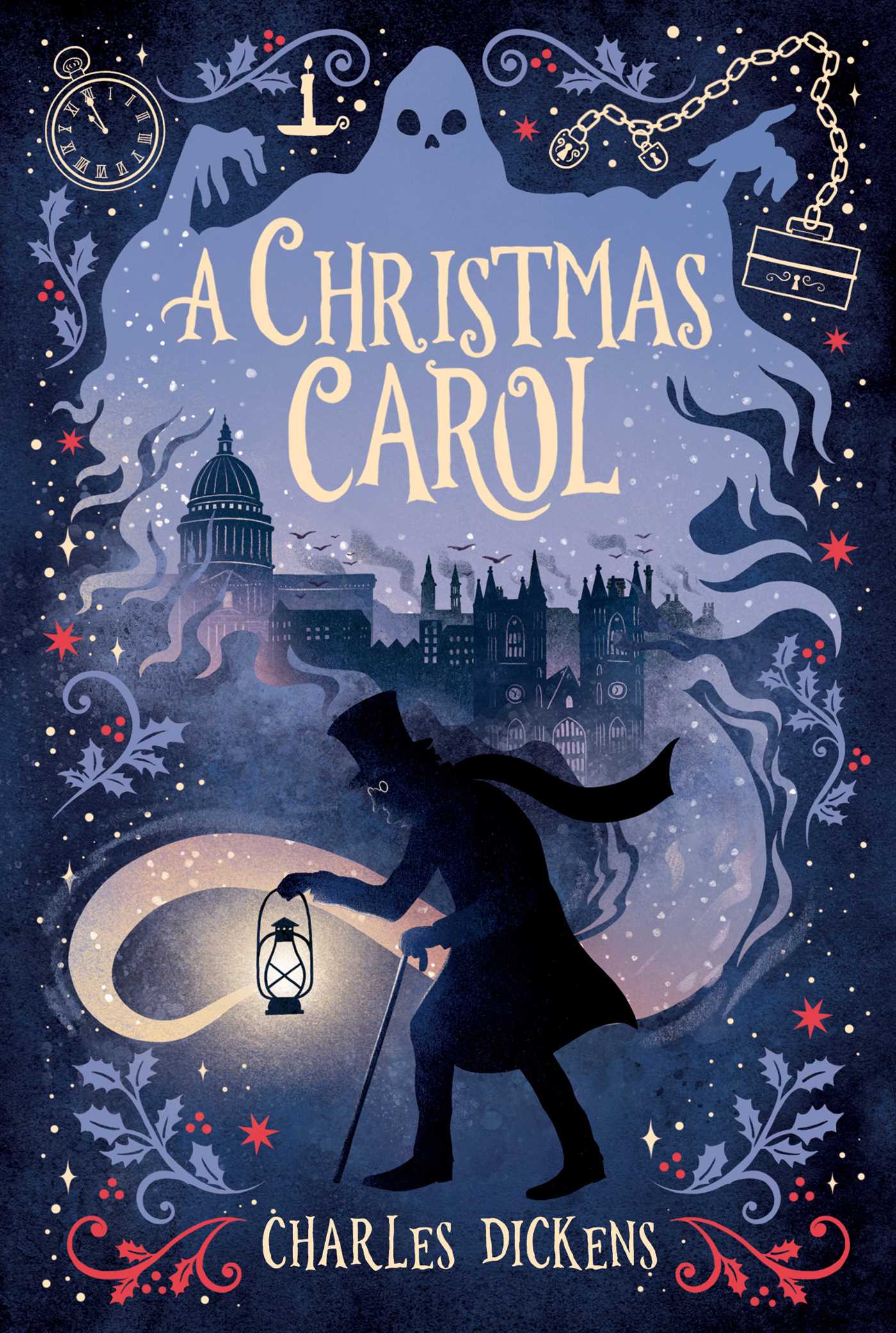
a timeless message of parables and ghost stories
At this festive time of the year, we remember the birth of our Savior, and we enjoy this time through many activities like spending quality time with family, walking streets twinkling with Christmas lights and watching iconic movies that we can all recite by heart. In my home, the story on constant repeat is the classic A Christmas Carol by Charles Dickens; we dramatically read the Dickens’ story and repeatedly watch several movie adaptations: Albert Finney’s Scrooge (a classic 1970s musical), Jim Carrey’s A Christmas Carol (an animated must), Jim Henson’s The Muppets Christmas Carol (the best of all!), and others… This classic story is beloved by many, but it is not commonly known that it was intentionally rooted in Biblical teachings. Dickens originally intended to distribute a pamphlet on the state of society’s lack of Christian generosity but, instead, decided to write a parable.
Dickens invited his readers to venture through a chilling ghost story with Ebenezer Scrooge who was haunted by his former partner—the dead as a coffin nail and tormented inhabitant of hell, Jacob Marley. In this tale, Dickens centers the story on two of Scrooge’s specified sins—want and ignorance (the latter being the worst). It should also be noted that Scrooge is never described as an unbeliever; he, at least, knows and appears to respect the Biblical stories. Scrooge’s redemption, then, is not necessarily a matter of coming to faith but, rather, one of allowing for the renewal of his heart.
But, before this redemption, we are first terrified and undone by the tormented wailings of Marley’s ghost:
“Not to know that ages of incessant labour, by immortal creatures, for this earth must pass into eternity before the good of which it is susceptible is all developed. Not to know that any Christian spirit working kindly in its little sphere, wherever it may be, will find its mortal life too short for its vast means of usefulness. Not to know that no space of regret can make amends for one life’s opportunities misused!”
And, our thoughts should be drawn to Christ’s parable of the rich man and Lazarus; in the Gospel of Luke, we are told of an unnamed rich man who chose to be willfully ignorant of the destitute man literally decaying and dying on his front door steps. Upon his death, the rich man is condemned to hell, but, as is stated in the parable, he still has a view of heaven and earth. In desperation, the rich man begs for the opportunity to warn his family of his folly so that they may avoid the same fate. The rich man’s request is denied.
As a display of creative genius, Dickens invited readers to wonder what message the rich man might desire to preach. In this Christmas ghost story, Marley’s haunting message to Scrooge is that hell’s inhabitants are doomed for all time to roam the earth observing the plight of the poor as one who is cognizant but no longer able to intervene; the eternal affliction of those in hell is to have lost the ability to participate in the work of the Kingdom of Heaven—to bring good news to the poor, to bind up the brokenhearted, and to proclaim liberty to the captives.
As the reader, it is abundantly obvious in the first few pages that Scrooge is not afforded the excuse of delegating charity to municipalities (to the Poor Law, Treadmill, and Union workhouses); to the contrary, Marley cries out that common welfare, charity, forbearance, and benevolence are all our business.
Today, just as in Dickens’ day, the need for Christian charity is great and the opportunity for benevolence is abundant: there are many who are honestly struggling financially, there are many who are downcast, there are many who are missing and in danger.
This Christmas, let’s remember Dickens’ call to take notice of those suffering and to love our neighbors as ourselves.
Merry Christmas and… “as Tiny Tim observed, God bless Us, Every One!”