
building an imagination for the far greater things
O King of glory, my victory won;
Rule and reign in me ’til Thy will be done;
Heart of my own heart, whatever befall;
Still be my vision, O Ruler of all.
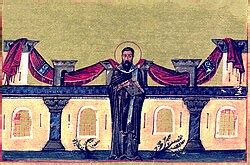
The manner in which we understand our calling, intended mission, and most impactful life legacy is a necessary consideration for followers of the Way because in what direction we direct our focused gaze is descriptive of the content of our hearts and minds. We can harmoniously declare as a congregation “be thou my vision” with the intention of sincerity; but, if through the course of our days we find that our actions, focus, and priorities differ than that of His vision, we must reflect. At the start of the year, many prioritize creating hopeful visions for the upcoming season of life; culturally, the focus typically centers on cultivating an improved look, establishing a healthy habit, or obtaining an achievement. Whether it is a leader presenting a directional vision or an individual determining an unreasonable resolution, the focus is forward and concerns what is new. But, through all of this, what is commonly lost is that looking backward is often more beneficial than glancing forward; there is wisdom in remembering the legacies of the faithful who came before us, and some things need to never be forgotten. The history of the church is full of men and women of faith who strove to set their vision on the Kingdom of God. Basil the Great is one such example.
In 379 A.D. Bishop Gregory of Nazianzen gave the eulogy for his close friend, Basil of Caesarea, and the focus of that oration was on what he called “the easiest ascent to heaven.” A significant portion of St. Basil’s life and ministry was established in the very wealthy city of Cappadocia, Turkey; St Basil said of the city that the rich not only had carriages upon carriages lined with gold but the servants of the elite also had as much as well. But, this was not the great city to which Gregory was referring in his eulogy; instead, his eyes were fixed on something far greater. But, to understand what caught his imagination, we have to understand to what St. Basil devoted his last decade of life.
In 368 A.D., Cappadocia experienced a severe drought which resulted the following year in the worst recorded famine in the city’s history. Hardship and suffering abounded; St. Basil’s personal descriptions of the experience, found in his written sermons, strike far beyond heart wrenching. It was a time when the wealthy expanded their storehouses and adorned themselves with precious metals and jewels; and, it was also a time when the destitute sold some their own children into slavery in order to afford bread for the children that remained. A painting of Cappadocia in 369 A.D. would likely be an accurate reflection of Dickens’ Tale of Two Cities—“It was the best of times, it was the worst of times, it was the age of wisdom, it was the age of foolishness.” From such times, Basil preached imploring messages of desperation and conviction but to little to no avail; but, despite him being a renown scholar of his age, Basil was not best remembered for his preaching or writing. During the famine, he was a man of action.
St. Basil of Caesarea spent years rallying a collaboration of monks and medical professionals to achieve what few thought was possible. By approximately 372 A.D., the ministry started to show fruit. The Basiliad, as it was later named, served as a leper colony that professionally treated and healed the afflicted, an orphanage that fed and educated children, a refuge for weary travelers, a medical facility that provided care to all in need, a school for free occupational training, and a monastery providing sanctuary to all without question; Basil, himself, called such a ministry a “poorhouse” (πτωχοτροφεῖον (ptochotrofeíon). Today, the standard set by St. Basil serves as the defining characteristic for the label hospital; in order to label a facility a hospital, it must provide care to all regardless of one’s ability to pay. And, Basil achieved such a ministry by appealing to the Christian heart. The Basiliad was not funded by lobbying for municipal finances or through the redistribution of the hoarded storehouses of the elite—it was an effort entirely sponsored through Christian charity, mercy, and generosity.
Because it was likely not permitted within the city limits, this combination of poorhouse, leper-colony, orphanage, refuge, school, and sanctuary, sat on the outskirts of the influential and wealthy city of Cappadocia. Regardless, Bishop Gregory of Nazianzen called the Basileias a “new city” to which all the spectacular wonders of the world paled in comparison. The Basileias banners were a shining beacon of Christian hope, the glory of Christ and the Gospel of Heaven, to the least of these; and, with such a vision—such an opportunity to witness an earthly vision of the Kingdom of Heaven in which His merciful will is done—nothing else is more beautiful. This prophetic vision was the focus of St. Basil’s funeral—it was his life work, his legacy, the physical display of a life lived with a heart broken for what breaks the heart of God.
Today, this legacy continues in many arenas: for the majority of the world, the poor only have access to medical services because of the obedient generosity of Christians to respond to Christ’s teaching of “when I was sick, you visited me” (Matthew 25:36); every day a countless number of desperate families are shown kindness, dignity, and hope at Christian pregnancy centers because the Church worships “the God who sees” (אֵל רֳאִי, El Roi)—the God of Heaven who saw and protected Hagar and her infant as they were abandoned in the wilderness (Genesis 16:13); whether known or not, the modern standards of charity enforced in medical facilities in developed nations owes its code of ethics to St. Basil’s ministerial mandates because the Law of God shouts “open wide your hand to your brother, to the needy and to the poor” (Deuteronomy 15:11); the hungry poor are well-fed at Christian food banks because of the Church’s faithfulness to the Biblical teaching of “when I was hungry, you gave me food” (Matthew 25:35); lost and vulnerable missing children are pursued because God calls us to “rescue the weak and the needy” (Psalm 82:4)…
This legacy, however, is ever on the brink of extinction. Over time, one arena after another has been sacrificed before secular altars: with a few exceptions, in developed nations the medical industry and funding for medical expenses has been delegated from the Church’s benevolent coffers to private insurance providers and godless municipal subsidies; as an overwhelming majority, the education of children regardless of economic status has been cast upon the untrustworthy ambitions of the nihilistic State; perhaps because of a history of trials and shortcomings, out of convenience orphanages have been wrongly entrusted to unaccountable bureaucracies who have infinitely perpetuated errors… Furthermore, battlefields that have yet to be abandoned by heavenly warriors struggle daily with finances, resources, and volunteers.
To worshipfully proclaim be thou my vision is to dream of His kingdom, to long to see the banners of God waving on the walls of a merciful refuge, and to vigorously chase after such a heavenly vision. But, vision requires imagination—we must stretch to see beyond the confines of our worldly perspective to see all that Heaven has in store; and, all that is needed to transpose such a prophetic imagination to reality is the drive of intentional resolution. This is not a display of stubbornness; it’s a statement of faith. Jesus said, “Truly, truly, I say to you, whoever believes in me will also do the works that I do; and greater works than these will he do, because I am going to the Father” (John 14:12). Basil spent years relentlessly trying to launch and establish the most basic of services; but, through faith and obedience, with a building momentum finally on his side, the next few years saw a tremendous expansion in the Basiliad cementing the legacy of its efforts to history. This outcome—produced by an intentional resolution demanding that prophetic imagination transform into tangible reality—is not due to our efforts or will, but because such a resolution follows Christ as He builds His kingdom, and “the gates of hell will not prevail against it” (Matthew 16:18). For whatever is asked for in the name of Jesus, when one’s resolute will is obediently aligned with the Father, it will be done.
“Whatever you ask in my name, this I will do, that the Father may be glorified in the Son. If you ask me anything in my name, I will do it” (John 14:13-14).